Overview
Lawrence LaFerla is an American-born professional who has lived in Japan since the mid-1990s. He is the division head of JAPANtranslation at WIP Japan, where he focuses on client communication, intake strategy, and editorial guidance for English-to-Japanese and broader CJK workflows. He is also known for his role as frontman and songwriter in the Boston underground bands 007 and Dub7 during the early 1980s and for later archival releases by The Kessels.[1][5][13]
Early life and family background
LaFerla was born in the Boston area in October 1960 and grew up in Saugus, part of Essex County. His earliest memory centers on playing an imported Beatles EP on a toy turntable a few weeks before the band’s U.S. breakthrough, a moment that tied his first impressions to the era’s pop culture.[1][4] As the youngest of five children in a large baby-boomer household, his formative years were most strongly shaped by his three older sisters, whose shared bedroom served as the family’s cultural hub, immersing him in the records, radio, and television of the 1960s. The eldest sibling, John LaFerla, became an obstetrician-gynecologist, medical educator, and public health leader in Maryland, and is also noted for twice running for the U.S. House of Representatives in Maryland’s 1st Congressional District, where he was unsuccessful in both races against Andy Harris. 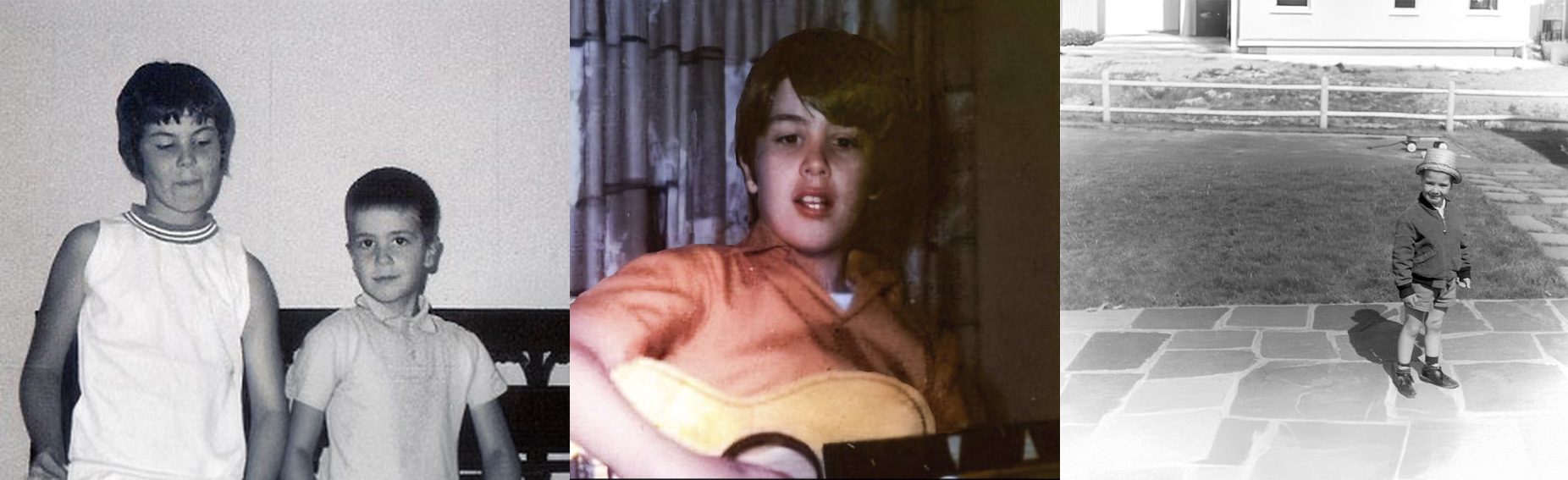
Maternal line (“Mom from Boston”)
His mother’s side descends from French-Canadian ancestors established in New France by the 17th century, later intersecting with the Ellis family of West London. A family story traces the meeting of his grandparents, Albert Henry Jules Valiquette Sr. (a Canadian Corps veteran convalescing in London) and Emily Ellen Ellis (hospital worker), to a chance wartime encounter. They married in 1920 in Montreal and later settled in Roxbury (Boston, MA), where the extended Valiquette/Ellis family network became part of LaFerla’s upbringing.[MB]
Paternal line (“Dad from Boston”)
On his father’s side, his grandparents emigrated from Sicily to Boston, with the family living in the North End and East Boston. His father, Salvatore (“Sal”), served in the U.S. Army during World War II, was captured by German forces in France in 1944, and spent eleven months as a POW at Stalag IV-A before liberation in 1945. Postwar, the family built stability through small business in East Boston.[DB]
Note on ancestry: contrary to some third-party summaries, there is no Maltese ancestry in LaFerla’s family background; the paternal line is Sicilian per family records and narrative accounts.[DB]
Music career: 007, Dub7, and The Kessels
Formation of 007
LaFerla’s musical partnership with drummer Garry Miles began in the mid-1970s in junior high school bands. By 1979, after their high school group dissolved, the two moved toward a more contemporary rock direction shaped by the UK mod and ska revival. In 1980, LaFerla, Miles, lead guitarist Steve Harrell, and bassist Dee Rail (born Derryl Johnson) co-founded 007, a Boston band blending punk, ska, post-punk, R&B, 1960s pop, and dub. LaFerla and Rail were co-frontmen, Harrell acted as musical director, and all three contributed original songs. Organist Billy Bacon (formerly of The Rentals) joined 007 in the early 1980s, adding keyboards and contributing to the band’s eclectic sound. The group played widely in New England and shared bills with acts including The Specials, The English Beat, Bad Brains, and Peter Tosh, and notably opened for The Clash at the Cape Cod Coliseum on 20 August 1982. This core lineup established the foundation of 007’s identity, which later evolved into Dub7.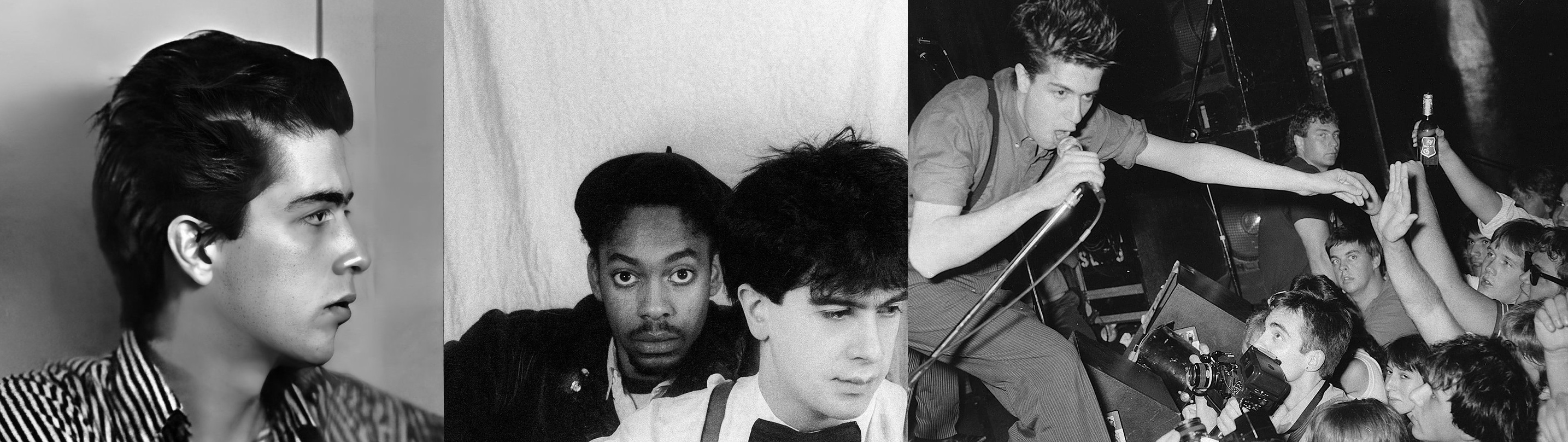
Transition to Dub7
Following their early years as 007, Rail quit and the group adopted the name Dub7 as their sound shifted toward more experimental and dub-influenced material. During this transition, bassist Ken Epps joined, suggested the band’s new name, and played on their 1984 single “Gavel Groove,” while keyboardist John “JG” Goetchius performed with Dub7 in the mid-1980s before becoming known for his long association with The Mighty Mighty Bosstones. Among their notable appearances, they hold the distinction of being both the first rock band to play at Boston’s historic Storyville nightclub when it reopened as a rock venue in 1982, and the last band to perform there before it ceased live music in 1984.[8][9] The band also reached the finals of the 1984 WBCN Rock ’n’ Roll Rumble, finishing as runners-up to The Schemers. The Rumble, organized by the influential Boston radio station WBCN, was then a major media event in the city, with extensive radio play, press coverage, and live promotion.[6][7] These two milestones marked the peak of Dub7’s visibility in the Boston music scene. After Dub7, the group reformed as The Kessels in 1986.
The Kessels and studio recordings
Bassist Matt Elmes joined The Kessels alongside LaFerla, Miles, and Harrell, contributing to the Tim O’Heir–produced single “Loosen Up with the Kessels,” recorded at Polymedia in 1986 but not released until 2023. The track’s belated release revived attention to the group’s studio work, while earlier performance history is represented on Live in Boston and South Yarmouth: 1980–1982.[8][9][5]
Songwriting and stage name
Across these phases, LaFerla’s songwriting credits included “Teenage Captive,” “Gavel Groove,” and “Loosen Up with the Kessels,” and during the 1980s he performed under the stage name Larry Williams.
Academic development and the interpretive turn
After the Boston music years, LaFerla returned to higher education. A course with historian Howard Zinn in the mid-1980s encouraged him to pursue university study after leaving the music scene. He graduated magna cum laude from the University of Massachusetts Boston in 1994 with a major in social psychology and additional work in sociology, anthropology, and philosophy. During his undergraduate years he underwent what he later called an “interpretive turn,” shifting from experimental and quantitative social psychology toward context-rich qualitative approaches to social research that were influenced by hermeneutics and phenomenology. He pursued independent studies, engaged faculty mentors across disciplines such as philosophy and organizational studies, and presented a comparative culture proposal at Uppsala University in Sweden.[10]
Career in Japan: JAPANtranslation (WIP Japan)
LaFerla has lived in Japan since 1994, primarily in the Kansai region. He is the founder and Division Head of JAPANtranslation, a specialized consulting division of WIP Japan that provides English-to-Japanese and CJK translation and adaptation services for overseas language service providers and international businesses. His role centers on strategic direction, client alignment, and intake systems, with an emphasis on trust, dependable workflows, and selective long-term partnerships. He also established +Refine, an editorial add-on within TEP designed to align tone and audience expectations, underscoring the division’s focus on human-centered quality.[13][14]
Beatles60 project
LaFerla co-hosts Beatles60, a collaborative project described by its creators as a historical society rather than a fan club. It reconstructs events from sixty years earlier on a strict day-by-day basis, using a methodology of chronological immersion summarized by the slogan “we ain’t jumping around.” The approach treats history as a real-time chronicle, allowing insights to emerge from the sequential juxtaposition of period sources, media, and commentary. While the Beatles provide the central thread, the project situates their story within the wider context of the 1960s, covering contemporaneous cultural shifts, media coverage, and global events alongside the band’s development.[15][16][17]
References
- [1] Lawrence LaFerla — personal website.
- [4] Boston Origins (PDF).
- [5] Boston 80s Band 007 / Dub7.
- [6] How did Lawrence LaFerla influence Boston’s punk scene? (PDF).
- [7] Lives in Dub — 007/Dub7 timeline.
- [8] “Loosen Up with the Kessels” release feature.
- [9] KARLISMYUNKLE — The Kessels single.
- [10] “From Method to Memory: Larry’s Interpretive Turn”.
- [11] 学歴 — ラフェーラ.
- [12] academic-turn.pdf.
- [13] JAPANtranslation — Tokyo & Osaka staff.
- [14] WIP Japan — Our Philosophy.
- [15] Beatles60 podcast — “Nothing Is Real / I Am The EggPod (Early 1964)”.
- [16] Beatles60 — blog.
- [17] Beatles60 — “Getting on Ed Sullivan”.
- [20] Larryblog — KESSELS.
- [MB] Background narrative: “Mom from Boston” (source text supplied by subject).
- [DB] Background narrative: “Dad from Boston” (source text supplied by subject).